


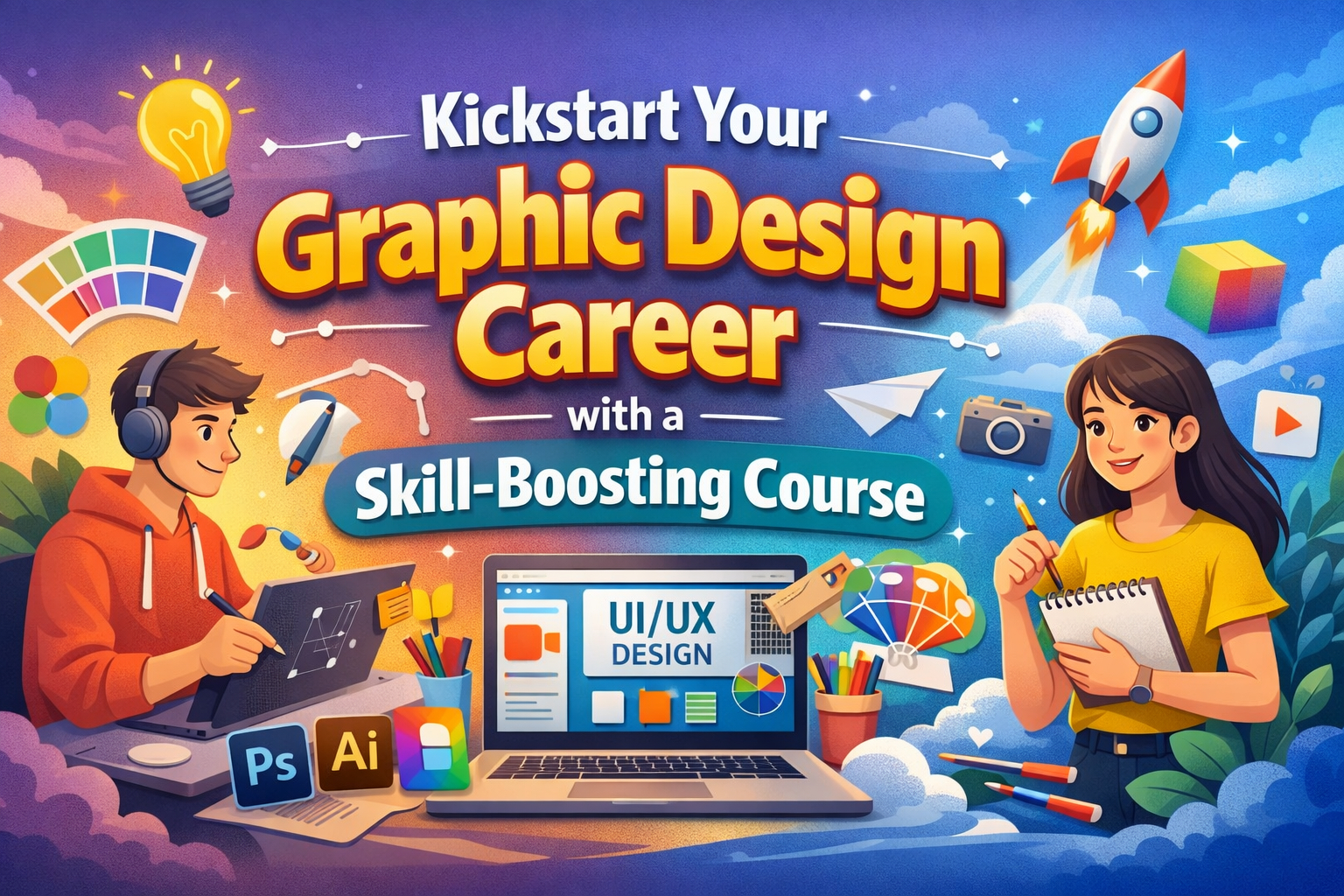
In today’s visually driven digital world, graphic design has emerged as one of the most in-demand and creatively fulfilling career paths. From eye-catching social media posts and brand logos to mobile app interfaces and website layouts, graphic designers play a crucial role in shaping how brands communicate with their audiences. If you have a passion for creativity, visuals, and digital tools, starting a career in graphic design can be both exciting and rewarding.
However, many aspiring designers struggle with one important question: How do you actually start a career in graphic design, especially without a formal design degree? This is where enrolling in a Graphic Design Course, particularly a skill booster course, can make a significant difference.
In this detailed guide, we will walk you through everything you need to know about starting a successful career in graphic design using a skill booster course—from understanding the industry and essential skills to choosing the right Graphic Design Course, building a portfolio, and landing your first job or freelance project.
Understanding Graphic Design as a Career
Graphic design is the art and practice of creating visual content to communicate ideas and messages. Designers use typography, color, imagery, layout, and composition to deliver information in a visually appealing and effective way.
Why Graphic Design Is a Promising Career Option
The demand for skilled graphic designers continues to grow across industries such as:
- Digital marketing
- Advertising and branding
- IT and software development
- Media and entertainment
- E-commerce
- Education and publishing
With businesses increasingly relying on digital platforms, the need for professional design has never been higher. A career in graphic design offers:
- High creative freedom
- Multiple career paths (job, freelance, remote work)
- Global opportunities
- Continuous learning and growth
- Competitive earning potential
Whether you want to work with a top agency, build your own brand, or freelance globally, graphic design provides flexibility and scalability.
What Is a Skill Booster Course in Graphic Design?
A skill booster course is a short-term, practical, and industry-focused training program designed to enhance specific skills quickly. Unlike traditional degree programs that take years, a skill booster Graphic Design Course focuses on real-world tools, projects, and workflows used by professionals.
Key Features of a Skill Booster Graphic Design Course
- Short duration (3–6 months)
- Practical, hands-on learning
- Industry-relevant curriculum
- Tool-based training (Adobe, Figma, Canva, etc.)
- Portfolio-oriented approach
- Ideal for beginners, students, and working professionals
These courses are especially beneficial for individuals who want to switch careers, upskill quickly, or enter the design industry without spending years in formal education.
Who Can Start a Career in Graphic Design?
One of the best things about graphic design is that it is open to people from all educational backgrounds. You do not need to be an artist or have advanced drawing skills to succeed.
Graphic Design Is Ideal For
- Students looking for creative careers
- Working professionals seeking a career switch
- Freelancers and entrepreneurs
- Marketing professionals
- Content creators
- Anyone with a passion for visuals and creativity
All you need is interest, consistency, and the right Graphic Design Course to guide you.
Essential Skills Required for Graphic Design
Before enrolling in a skill booster course, it’s helpful to understand the core skills you will develop as a graphic designer.
Design Fundamentals
You’ll learn the basics of:
- Color theory
- Typography
- Layout and composition
- Visual hierarchy
- Branding principles
These fundamentals form the foundation of every professional design.
Software Proficiency
A quality Graphic Design Course will train you on industry-standard tools such as:
- Adobe Photoshop
- Adobe Illustrator
- Adobe InDesign
- Figma
- Canva
Mastering these tools is essential for executing your creative ideas professionally.
Creativity and Visual Thinking
Graphic designers must think creatively and visually to solve problems. Skill booster courses often include creative exercises that enhance imagination and conceptual thinking.
Communication Skills
Design is about communication. You need to understand client requirements and translate them into visuals effectively.
Time Management and Consistency
Meeting deadlines and maintaining consistency across designs is crucial in professional environments.
Why Choose a Skill Booster Graphic Design Course?
Enrolling in a skill booster Graphic Design Course gives you a structured learning path and accelerates your entry into the industry.
Benefits of a Skill Booster Course
- Fast Learning Curve
Instead of spending years in theory-heavy programs, you gain job-ready skills in months.
- Practical Exposure
Most courses include real-world projects like logo design, social media creatives, posters, and brand kits.
- Industry-Relevant Curriculum
Skill booster courses are designed according to current market trends and employer expectations.
- Portfolio Development
You finish the course with a professional portfolio, which is more important than certificates in graphic design.
- Career Support
Many Graphic Design Course providers offer placement assistance, internships, and freelancing guidance.
How to Choose the Right Graphic Design Course?
Selecting the right Graphic Design Course is a critical step in your career journey.
Factors to Consider
- Course Curriculum
Ensure the course covers:
- Design fundamentals
- Adobe tools
- UI/UX basics
- Branding and marketing design
- Portfolio projects
- Practical Projects
Look for courses that focus on hands-on assignments rather than only theory.
- Instructor Experience
Trainers with real industry experience can provide valuable insights beyond textbooks.
- Course Duration and Flexibility
Choose a program that fits your schedule, especially if you are a student or working professional.
- Reviews and Testimonials
Check student reviews to understand the course quality and outcomes.
Step-by-Step Guide to Starting Your Graphic Design Career
Step 1: Learn the Basics Through a Graphic Design Course
Start by enrolling in a skill booster Graphic Design Course to build a strong foundation.
Step 2: Practice Daily
Consistency is key. Practice designing posters, logos, banners, and social media posts regularly.
Step 3: Build a Strong Portfolio
Your portfolio should showcase:
- Variety of designs
- Creativity and originality
- Real-world use cases
- Before-and-after concepts
A strong portfolio often matters more than your qualifications.
Step 4: Choose a Specialization
As you grow, you can specialize in areas such as:
- Branding and logo design
- Social media design
- UI/UX design
- Motion graphics
- Packaging design
Skill booster courses help you explore these options early.
Step 5: Start Freelancing or Apply for Jobs
Once confident, start:
- Applying for junior graphic designer roles
- Freelancing on platforms like Fiverr, Upwork, or Freelancer
- Taking internships for real-world exposure
Career Opportunities After Completing a Graphic Design Course
A professional Graphic Design Course opens doors to various roles, including:
- Graphic Designer
- Visual Designer
- Brand Designer
- UI Designer
- Social Media Designer
- Marketing Designer
- Creative Executive
You can work in agencies, startups, corporate firms, or as an independent freelancer.
Freelancing vs Full-Time Job in Graphic Design
Freelancing
Pros:
- Flexible work hours
- Global clients
- Unlimited income potential
Cons:
- Irregular income initially
- Requires self-marketing
Full-Time Job
Pros:
- Stable income
- Team collaboration
- Structured growth
Cons:
- Fixed working hours
Many designers start with a job and gradually transition into freelancing.
How Long Does It Take to Become a Graphic Designer?
With dedication and the right Graphic Design Course, you can become job-ready within 3 to 6 months. Mastery, however, comes with continuous practice and real-world experience.
Common Myths About Graphic Design Careers
Myth 1: You must be good at drawing
Reality: Creativity and software skills matter more.
Myth 2: Graphic design has limited scope
Reality: The industry is vast and constantly evolving.
Myth 3: Only degree holders succeed
Reality: Skills and portfolio matter far more than degrees.
Tips to Succeed as a Graphic Designer
- Stay updated with design trends
- Follow top designers for inspiration
- Take feedback positively
- Build a strong online presence
- Keep learning new tools and techniques
Final Thoughts
Starting a career in graphic design has never been more accessible. With the growing demand for visual content and digital branding, skilled designers are highly valued across industries. A skill booster Graphic Design Course acts as a launchpad, helping you gain practical skills, industry exposure, and confidence in a short time.
Whether you are a student, a working professional, or someone looking for a creative career switch, investing in the right Graphic Design Course can transform your future. With consistent practice, a strong portfolio, and the right mindset, you can build a successful and fulfilling career in graphic design.
If you’re ready to turn your creativity into a profession, now is the perfect time to start your graphic design journey.
Frequently Asked Questions (FAQs)
What is the best Graphic Design Course for beginners?
The best Graphic Design Course for beginners is one that focuses on design fundamentals, hands-on practice, and industry-standard tools like Adobe Photoshop, Illustrator, and Figma. Skill booster courses are ideal because they are short-term, practical, and designed to make learners job-ready quickly.
Do I need a degree to start a career in graphic design?
No, a degree is not mandatory to build a career in graphic design. Most employers and clients prioritize skills, creativity, and a strong portfolio over formal qualifications. Completing a professional Graphic Design Course and showcasing your work can help you enter the industry successfully.
How long does it take to learn graphic design through a skill booster course?
A skill booster Graphic Design Course usually takes 3 to 6 months, depending on the curriculum and your practice consistency. With regular practice and real-world projects, learners can become job-ready within this timeframe.
Can I get a job after completing a Graphic Design Course?
Yes, many learners secure entry-level jobs, internships, or freelance projects after completing a Graphic Design Course. Courses that include portfolio development, live projects, and career support significantly improve job placement opportunities.
What tools are taught in a Graphic Design Course?
Most professional Graphic Design Courses cover industry-standard tools such as Adobe Photoshop, Adobe Illustrator, Adobe InDesign, Figma, and Canva. Learning these tools is essential for working on real-world design projects.
Is graphic design a good career option in the future?
Yes, graphic design is a future-proof career due to the increasing demand for digital content, branding, and online marketing. With businesses investing heavily in visual communication, skilled designers trained through a Graphic Design Course will continue to have strong career opportunities.