


In today’s fast-changing job market, one question constantly comes up among students and parents:
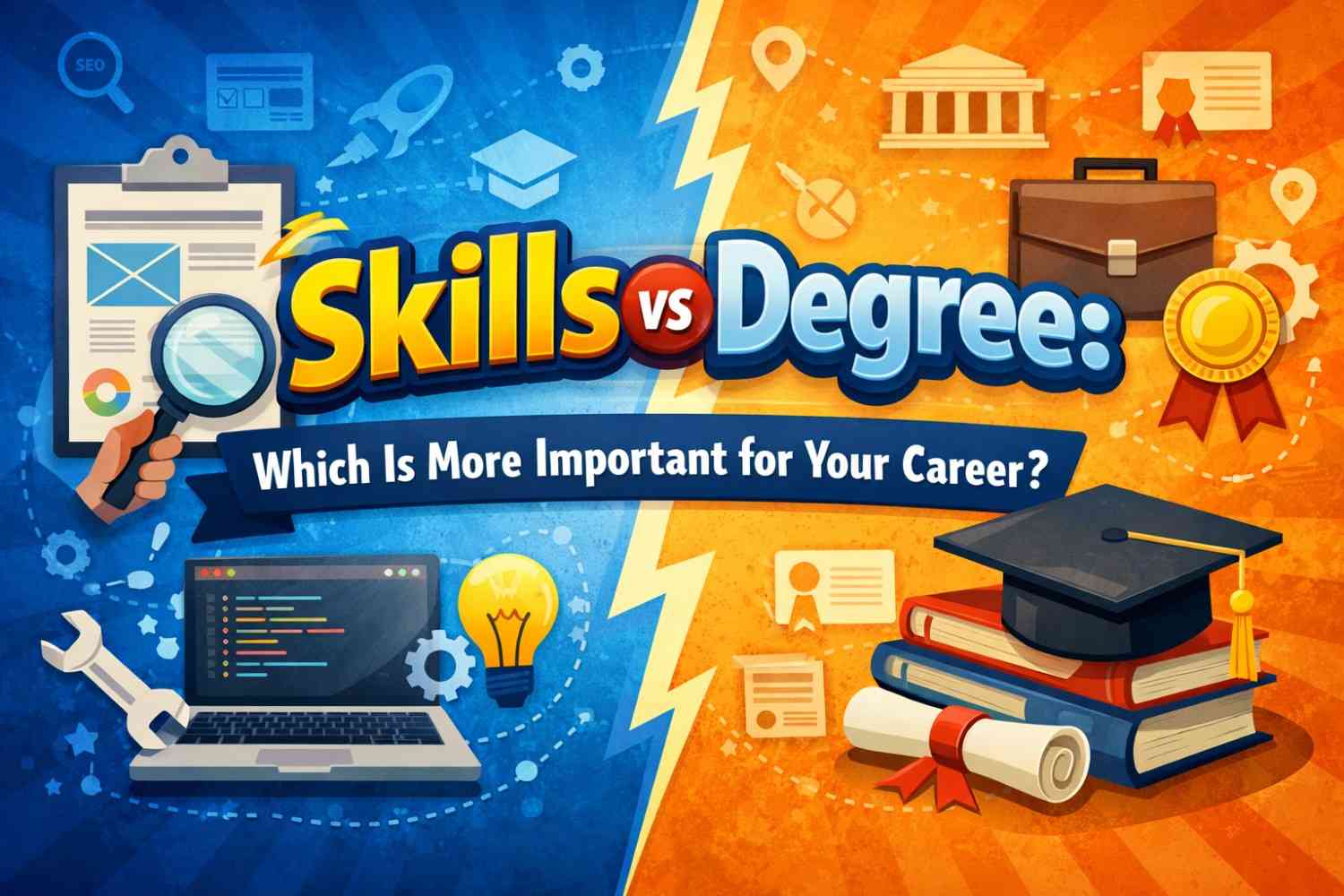
Is a degree more important, or do skills matter more?
For years, a college degree was considered the ultimate path to success. But in the digital era — especially in industries like IT, Digital Marketing, Web Development, and AI — employers are increasingly focusing on what you can do, not just what you studied.
Let’s break this down clearly.
What is a Degree?
A degree is a formal qualification awarded by a university or college after completing an academic program (like B.A., B.Com, B.Tech, MBA, etc.).
Benefits of a Degree:
-
Provides structured theoretical knowledge
-
Recognized by government and traditional organizations
-
Required for certain professions (doctor, lawyer, government jobs)
-
Builds academic credibility
However, a degree alone does not guarantee practical expertise or job readiness.
What Are Skills?
Skills are practical abilities that allow you to perform tasks effectively. They can be technical (hard skills) or personal (soft skills).
Examples of High-Demand Skills:
-
SEO & Digital Marketing
-
Web Development
-
App Development
-
Data Analysis
-
Graphic Designing
-
Communication & Problem-Solving
In industries like digital marketing and software development, companies often test your skills before hiring — through assignments, portfolios, or live projects.
Why Skills Are Becoming More Important
Industry Focus on Practical Knowledge
Companies want professionals who can deliver results from Day 1. Practical skills reduce training time and increase productivity.
Rapidly Changing Technology
Technology evolves faster than traditional university curriculums. Skill-based courses are often updated more quickly.
Freelancing & Entrepreneurship Opportunities
Many successful freelancers and entrepreneurs don’t rely solely on degrees — they rely on expertise and results.
Portfolio > Paper Qualification
Recruiters increasingly ask:
-
Can you rank a website?
-
Can you design a responsive website?
-
Can you run profitable ads?
They look at your work, not just your marks.
When a Degree Matters More
A degree is still important in situations like:
-
Government jobs
-
Higher education (Master’s/PhD)
-
Corporate roles with eligibility criteria
-
Visa and international job applications
So, degrees still hold value — but mostly as an eligibility factor.
Skills vs Degree – The Real Answer
It’s not about choosing one over the other.
The smartest approach is:
Degree + Practical Skills = Maximum Career Growth
A degree builds your foundation.
Skills make you employable.
Students who combine academic education with industry-relevant training have a much higher chance of landing good jobs.
How Students Can Gain Practical Skills
Here’s what you can do:
-
Enroll in industry-focused certification courses
-
Work on real projects
-
Build a portfolio website
-
Do internships
-
Learn from experienced mentors
Institutes like Synarion Academy focus on practical, industry-oriented training in Digital Marketing, Web Development, App Development, and AI — helping students become job-ready, not just degree holders.
What Do Employers Really Want?
Modern employers look for:
-
Problem-solving ability
-
Practical knowledge
-
Adaptability
-
Communication skills
-
Real project experience
A candidate with strong skills and real-world exposure often stands out more than someone with only academic qualifications.
Final Verdict
In 2026 and beyond:
-
Degree gives you eligibility.
-
Skills give you employability.
-
Combination gives you success.
If you are a student confused about your career path, remember:
👉 Focus on building skills alongside your degree.
👉 Learn something that makes you job-ready.
👉 Invest in practical knowledge.