


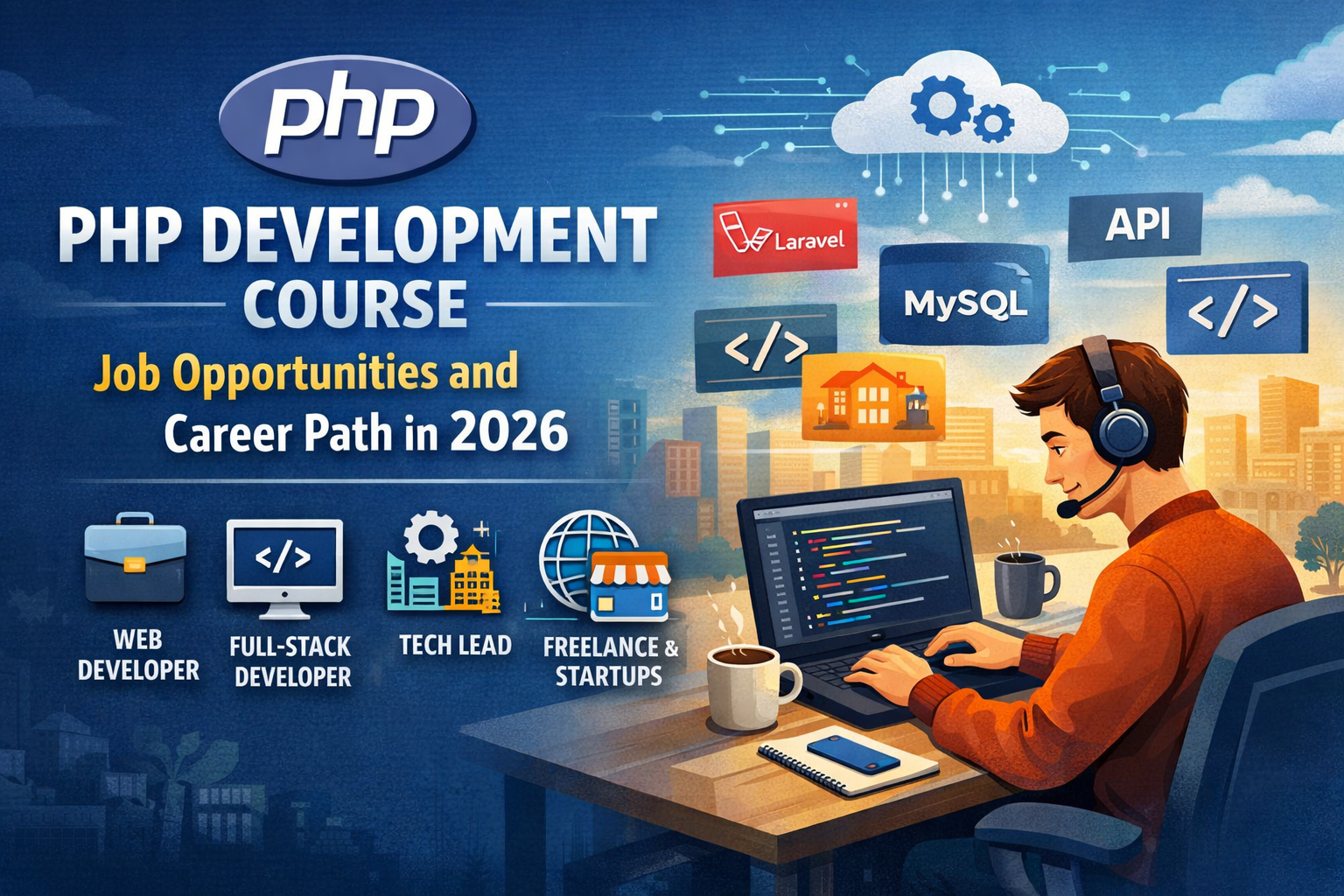
way businesses operate, communicate, and grow. Among the myriad of programming languages available today, PHP (Hypertext Preprocessor) continues to hold a vital position as one of the most widely used server-side scripting languages. Its robustness, ease of integration with databases, and flexibility make it a staple in web development. Enrolling in a PHP Development Course equips learners with industry-relevant skills to build dynamic, scalable applications. As we venture deeper into 2026, the demand for skilled PHP developers is not only sustaining but also evolving alongside emerging technologies such as cloud computing, edge computing, microservices, and AI-driven applications.
A PHP Development Course equips learners with the skills required to build dynamic websites and web applications. Beyond just learning PHP syntax, an advanced course bridges the gap between academic knowledge and real-world application, unlocking multiple career pathways and opportunities for professional growth.
In this comprehensive blog post, we’ll explore the career opportunities, industry demand, skills required, growth prospects, salary potential, and future trends related to PHP development in 2026.
Understanding PHP and Its Relevance in 2026
PHP was originally developed in the mid-1990s and has since evolved into a powerful server-side scripting language used for web development. Unlike many languages that are domain-specific, PHP has endured because of its:
- Open-source nature
- Wide community support
- Seamless integration with databases like MySQL, PostgreSQL
- Compatibility with major operating systems
- Ease of embedding within HTML
Even after decades of web evolution, PHP continues to power a significant portion of the internet. Popular platforms such as WordPress, Drupal, Magento, and Joomla are built on PHP — meaning millions of websites and web apps depend on PHP for performance, customization, and responsiveness.
In 2026, PHP is still relevant because:
- Modern frameworks like Laravel, Symfony, and CodeIgniter have revitalized PHP development by promoting best practices and efficiency.
- The PHP ecosystem now supports RESTful APIs, microservices architecture, and integrations with cloud platforms.
- PHP developers can build scalable and maintainable applications compatible with modern development workflows.
Why Enroll in a PHP Development Course in 2026?
When considering careers in web development, many aspiring developers have questions like:
- Is PHP worth learning in 2026?
- Will PHP be relevant long term?
- What types of jobs can PHP skills get me?
A well-structured PHP Development Course is designed to answer these questions through hands-on projects, real-world case studies, and industry-aligned curricula.
Here’s why enrolling in a PHP course in 2026 is a smart career move:
Skill Enhancement for Web Development
A comprehensive course helps you go beyond basics to learn:
- Object-Oriented Programming (OOP)
- MVC architecture and design patterns
- Framework usage (e.g., Laravel, Symfony)
- Database design and optimization
- Security best practices
Real-World Project Exposure
Most courses include real portfolio projects, such as:
- E-commerce platforms
- CMS systems
- API integrations
- Dashboard and reporting systems
This translates into work experience even before you graduate.
Structured Learning and Mentorship
Compared to self-study, structured courses offer mentorship, debugging guidance, and instructor support — helping you overcome learning plateaus faster.
Industry Credibility
Certificates from recognized institutes or online platforms can enhance credibility when applying for jobs, freelancing gigs, or contract roles.
Core Skills You’ll Gain from a PHP Development Course
Completing a professional course prepares you with both foundational and advanced competencies:
Technical Skills
- PHP Syntax & Fundamentals
- Variables, loops, functions, arrays, and error handling.
- Database Management
- SQL, CRUD operations, relationships, and optimization.
- Frameworks
- Laravel: for rapid application development.
- Symfony: enterprise-grade modular development.
- CodeIgniter: lightweight and easy to learn.
- Web Architecture
- MVC structure and REST API development.
- Frontend Integration
- JavaScript basics, AJAX, Bootstrap, and templating with Blade or Twig.
- Security Best Practices
- Input validation, CSRF tokens, session management, and encryption.
- Version Control
- Git and collaboration workflows.
Professional Skills
- Problem-solving and analytical thinking
- Project planning and requirements analysis
- Debugging and troubleshooting
- Client communication and requirement gathering
Together, these skills help learners become industry-ready developers as soon as the course concludes.
Career Pathways After a PHP Development Course
A PHP developer can pursue several career routes depending on interests and proficiency. These include:
Junior / Mid-Level PHP Developer
Beginners often start as junior developers, focusing on smaller modules, bug fixes, and learning production workflows. With experience, they can move toward mid-level roles that involve feature delivery and system optimization.
Full-Stack Web Developer
Developers proficient in both backend (PHP) and front-end (HTML, CSS, JS) can position themselves as full-stack developers — a role highly sought after in startups and dynamic tech environments.
Laravel / Framework Specialist
Laravel is one of the most popular PHP frameworks, valued for its expressive syntax and speed of development. Specialists in Laravel are highly paid and work on scalable enterprise applications.
Web Application Architect
Experienced developers with deep system design and architectural knowledge can evolve into architects — guiding project standards and overseeing development strategies.
Freelance Web Developer
PHP’s ubiquity in web projects makes it ideal for freelance work. Freelancers can build websites, CMS customizations, plugins, and bespoke applications for global clients.
Enterprise PHP Developer
Large corporations using database-intensive PHP platforms often hire developers with expertise in performance optimization, security, and system integrations.
Technical Lead or Manager
With extensive team experience, developers can transition into people-leader roles, guiding teams, handling code reviews, and driving engineering excellence.
Industry Demand for PHP Developers in 2026
Even in the face of new programming paradigms, PHP remains a core backend language for web applications. Reasons for undiminished demand include:
Continued Market Share of PHP Platforms
A significant portion of the internet runs on PHP-based CMS and e-commerce platforms:
- WordPress powers nearly a third of all active websites.
- Magento and WooCommerce are top choices for online stores.
Legacy Systems and Maintenance
Many businesses have long-term PHP systems that need ongoing support, enhancements, and modernization.
Integration with Modern Technologies
PHP now integrates well with:
- RESTful services
- Microservices
- Cloud functions
This adaptability boosts its relevance.
Cost-Effectiveness
PHP hosting and deployment are often cheaper compared to some other technologies, making it attractive to small and medium businesses.
Global Freelance Opportunities
Platforms like Upwork, Freelancer, and Fiverr constantly list PHP projects, from simple web pages to complex business applications.
Salary Expectations for PHP Developers
Salary potential varies widely depending on experience, location, company size, and role complexity. In 2026, trends indicate:
- Entry-Level Developers can expect competitive salaries with room for quick growth as they gain experience.
- Mid-Level Developers with 2–4 years of experience often see substantial increments.
- Senior Developers and Framework Experts (especially Laravel specialists) command premium pay due to scarcity and expert knowledge.
- Freelancers and Contract Workers can earn per project or hourly rates that sometimes exceed full-time salaries when demand is high.
Additionally, certified developers with portfolios of real projects often negotiate better packages than those without verifiable experience.
Freelancing & Entrepreneurship with PHP Skills
A compelling benefit of learning PHP is entrepreneurial freedom. You’re not limited to full-time jobs; you can:
Start Freelancing
- Build websites for local businesses
- Create bespoke online systems
- Develop plugins, themes, and SaaS tools
Launch Your Own Product
PHP enables you to build:
- Membership platforms
- Booking and reservation systems
- Customer portals
With the right business model and marketing strategy, your skills can translate into sustainable revenue streams.
How PHP Development Fits with Future Tech Trends?
Microservices & APIs
Modern applications emphasize modular services. PHP, with frameworks like Laravel and Slim, can create APIs and microservices that integrate seamlessly with broader systems architecture.
Cloud Integration
Cloud platforms such as AWS, Azure, and Google Cloud support PHP applications, allowing scalable and distributed deployments.
Headless CMS
PHP can serve as a backend for headless CMS systems, powering content delivery while decoupling frontend experiences.
AI-Driven Web Apps
Developers can integrate machine learning services (via APIs) into web applications — enabling smart features like recommendation engines, chatbots, and automated workflows.
IoT Dashboards
PHP’s strength in backend data handling makes it suitable for dashboards and analytics interfaces that support IoT devices.
Choosing the Right PHP Development Course
When selecting a course, consider:
Curriculum Coverage
Ensure it includes:
- Core PHP fundamentals
- Advanced PHP programming
- Database integration
- Frameworks like Laravel
- Practical projects
Certificates and Credibility
Look for courses with recognized certificates that enhance resume value.
Mentorship and Community
Learning with support from instructors and peers accelerates skill development.
Placement Assistance
Courses that provide talent-placement support often help you transition into jobs smoothly.
Cost and Duration
Evaluate based on your budget and time availability — but always prioritize quality over price.
Tips for Success as a PHP Developer
- Build a Portfolio
Showcase projects that highlight your skills — both frontend and backend. - Learn Version Control
Git is essential for team collaboration. - Master One Framework First
Laravel is recommended for most beginners due to widespread use and community support. - Stay Updated
Follow PHP releases and industry trends. - Participate in Open-Source
Contributing to projects enhances experience and credibility. - Practice Problem-Solving
Real coding challenges prepare you for technical interviews.
Conclusion
By 2026, PHP has reinforced its legacy as a stable, versatile, and widely adopted web development language. A PHP Development Course not only provides foundational knowledge but also shapes learners into job-ready professionals capable of navigating the competitive tech landscape. Whether your goal is to become a full-stack developer, a framework specialist, a freelancer, or even to launch your own tech venture, learning PHP offers a profitable and fulfilling career path.
With continued industry demand, flexibility in projects, and endless opportunities for growth, PHP remains one of the most practical choices for anyone aspiring to succeed in web development.
FAQs
Is a PHP Development Course worth learning in 2026?
Yes, a PHP Development Course is absolutely worth learning in 2026. PHP continues to power millions of websites, including CMS platforms like WordPress and eCommerce solutions like WooCommerce and Magento. Businesses still actively hire PHP developers for web applications, maintenance, and modern backend development.
What job opportunities are available after completing a PHP Development Course?
After completing a PHP Development Course, you can work as a PHP Developer, Full-Stack Developer, Laravel Developer, Backend Developer, Web Application Developer, or Freelance Web Developer. With experience, you can also move into roles like Technical Lead or Software Architect.
What skills are required to become a PHP developer in 2026?
To become a PHP developer in 2026, you should have strong knowledge of PHP fundamentals, MySQL databases, object-oriented programming, PHP frameworks like Laravel, REST APIs, basic frontend technologies, Git version control, and web security practices.
Can beginners join a PHP Development Course?
Yes, beginners can easily join a PHP Development Course. Most courses start with basic programming concepts and gradually move toward advanced topics. Prior knowledge of HTML and CSS is helpful but not mandatory.
What is the career growth path for PHP developers?
The career path usually starts as a Junior PHP Developer, followed by Mid-Level Developer, Senior PHP Developer, and then roles such as Full-Stack Developer, Technical Lead, or Project Manager. Skilled developers can also build their own products or work as high-earning freelancers.
Can PHP developers work as freelancers in 2026?
Absolutely. PHP developers have strong freelancing opportunities in 2026 due to high demand for website development, CMS customization, API development, and backend support. Freelancers can work with global clients and earn project-based or hourly income.