


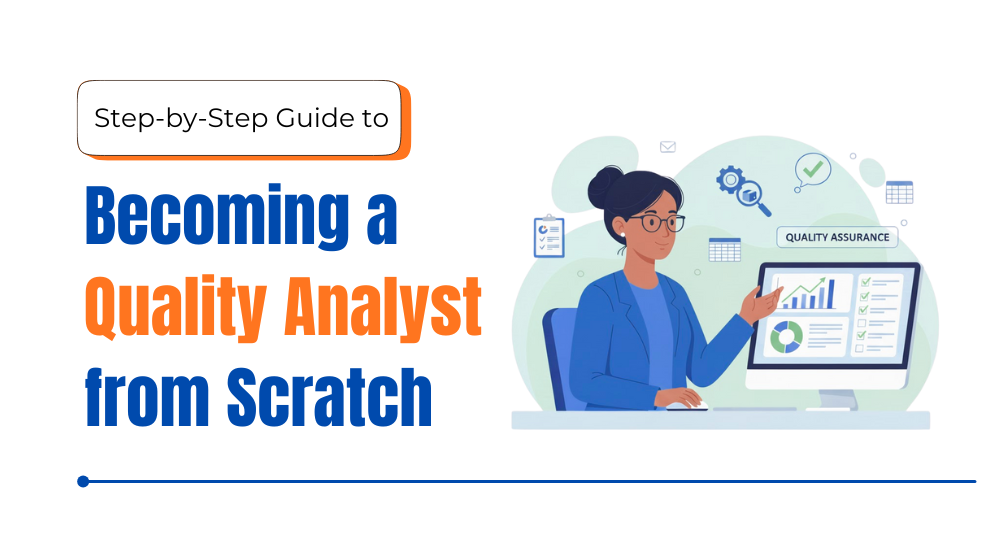
In today’s fast-growing IT world, Quality Analysts (QA) play a crucial role in ensuring that every software, mobile app, or website functions seamlessly. If you’ve ever wondered how to start a career as a Quality Analyst from scratch, this detailed guide is for you. Whether you’re a fresher or transitioning from another field, becoming a QA professional is achievable with the right roadmap, skills, and mindset.
What Is a Quality Analyst (QA)?
A Quality Analyst is responsible for testing software to ensure it’s free from bugs, meets requirements, and provides a smooth user experience. QA professionals act as the final checkpoint before a product reaches the customer.
They perform manual and automated testing, identify issues, and work closely with developers to improve quality. The role combines technical understanding, attention to detail, and problem-solving skills.
Step 1: Understand the Role of a QA Professional
Before starting your journey, it’s essential to understand what QA work involves. Quality Analysts perform tasks such as:
-
Reviewing project requirements and specifications
-
Creating test plans and cases
-
Executing manual and automated tests
-
Reporting bugs and tracking them
-
Ensuring functionality, usability, and security
A QA professional doesn’t just “find errors” — they ensure that the software aligns with the business goals and user expectations.
Step 2: Learn the Basics of Software Testing
Start with a strong foundation in software testing fundamentals. Learn what testing means and why it’s critical.
Here are key areas to focus on:
-
Manual Testing: Understanding the step-by-step process of checking software without automation tools.
-
Software Development Life Cycle (SDLC): Learn how software moves from planning to deployment.
-
Software Testing Life Cycle (STLC): Understand the process of test planning, execution, and closure.
-
Bug Reporting: Learn how to document issues clearly using tools like Jira or Bugzilla.
Tip: Start with free YouTube tutorials or beginner QA courses before moving to advanced tools.
Step 3: Learn Key QA Tools
As you progress, start mastering tools that QA professionals use daily.
Here are some must-learn tools for beginners:
| Category | Tools | Purpose |
|---|---|---|
| Test Management | Jira, TestRail | Create and manage test cases |
| Bug Tracking | Bugzilla, Mantis | Report and track issues |
| Automation Testing | Selenium, Cypress | Automate repetitive test cases |
| API Testing | Postman | Test APIs for data transfer and response |
| Performance Testing | JMeter | Analyze app performance under load |
Mastering these tools not only boosts your confidence but also enhances your job readiness.
Step 4: Learn Basic Programming and Databases
While manual testing doesn’t always require coding, automation testing does.
Start with basic programming languages like:
-
Java (most commonly used in automation testing)
-
Python (for beginners due to simplicity)
-
SQL (to validate data in databases)
Knowing how to write test scripts, query databases, and debug issues makes you a more valuable QA professional.
Step 5: Work on Real-Time Projects
Practical experience is key. Even if you’re a beginner, you can gain experience through:
-
Online QA internships
-
Freelancing projects
-
Open-source software testing
-
Personal practice on demo websites
Working on live projects helps you understand real-world testing environments, teamwork, and agile workflows.
Step 6: Learn Automation Testing
After mastering manual testing, the next big step is learning automation testing.
Automation is in high demand and improves testing efficiency.
Start with:
-
Selenium WebDriver (most popular automation framework)
-
TestNG or JUnit for managing test scripts
-
Cypress or Playwright for modern web testing
Automation not only increases your skill set but also opens doors to higher-paying QA roles.
Step 7: Build a Professional Portfolio
Your QA portfolio should showcase your practical knowledge and ability to handle real tasks.
Include:
-
Your test case examples
-
Bug reports you’ve created
-
Automation scripts (if any)
-
Sample test plans and documentation
A portfolio is a strong addition when applying for QA jobs — it demonstrates both skill and initiative.
Step 8: Get Certified
Certifications can give you a competitive edge in the job market.
Some recognized QA certifications include:
-
ISTQB (International Software Testing Qualifications Board)
-
Certified Software Quality Analyst (CSQA)
-
Postman API Testing Certification
-
Automation Testing with Selenium Certificate
These certifications validate your expertise and commitment to your QA career.
Step 9: Apply for Entry-Level QA Roles
Once you’ve learned the fundamentals and gained some project experience, start applying for positions like:
-
QA Intern
-
Junior QA Tester
-
Software Test Engineer (Manual)
-
Automation Test Engineer
Tailor your resume to highlight tools, certifications, and real-world project experience.
Pro Tip: Create a LinkedIn profile and join QA communities — most recruiters search for talent there.
Step 10: Keep Learning and Evolving
The QA industry evolves rapidly. Keep learning new technologies like:
-
AI-driven testing
-
Performance engineering
-
Cloud testing
-
Security testing
Continuous learning ensures you stay relevant and move toward senior QA or Test Lead roles in the future.
Why Choose a Career as a Quality Analyst?
Here’s why QA is one of the most rewarding tech careers today:
-
High Demand: Every company releasing software needs QA professionals.
-
Competitive Salaries: Freshers earn ₹3–5 LPA, while experienced QA leads earn ₹10–15 LPA+.
-
Global Opportunities: QA is a universal tech role with remote flexibility.
- Growth Path: You can grow into roles like Automation Engineer, Test Lead, or QA Manager.
If you want guided learning with real-world projects and job assistance, institutes like Synarion Academy can help you master QA skills and kickstart your IT career confidently.
Final Thoughts
Becoming a Quality Analyst from scratch is absolutely possible — you don’t need a computer science degree to start.
All you need is consistent learning, hands-on practice, and passion for perfection.