


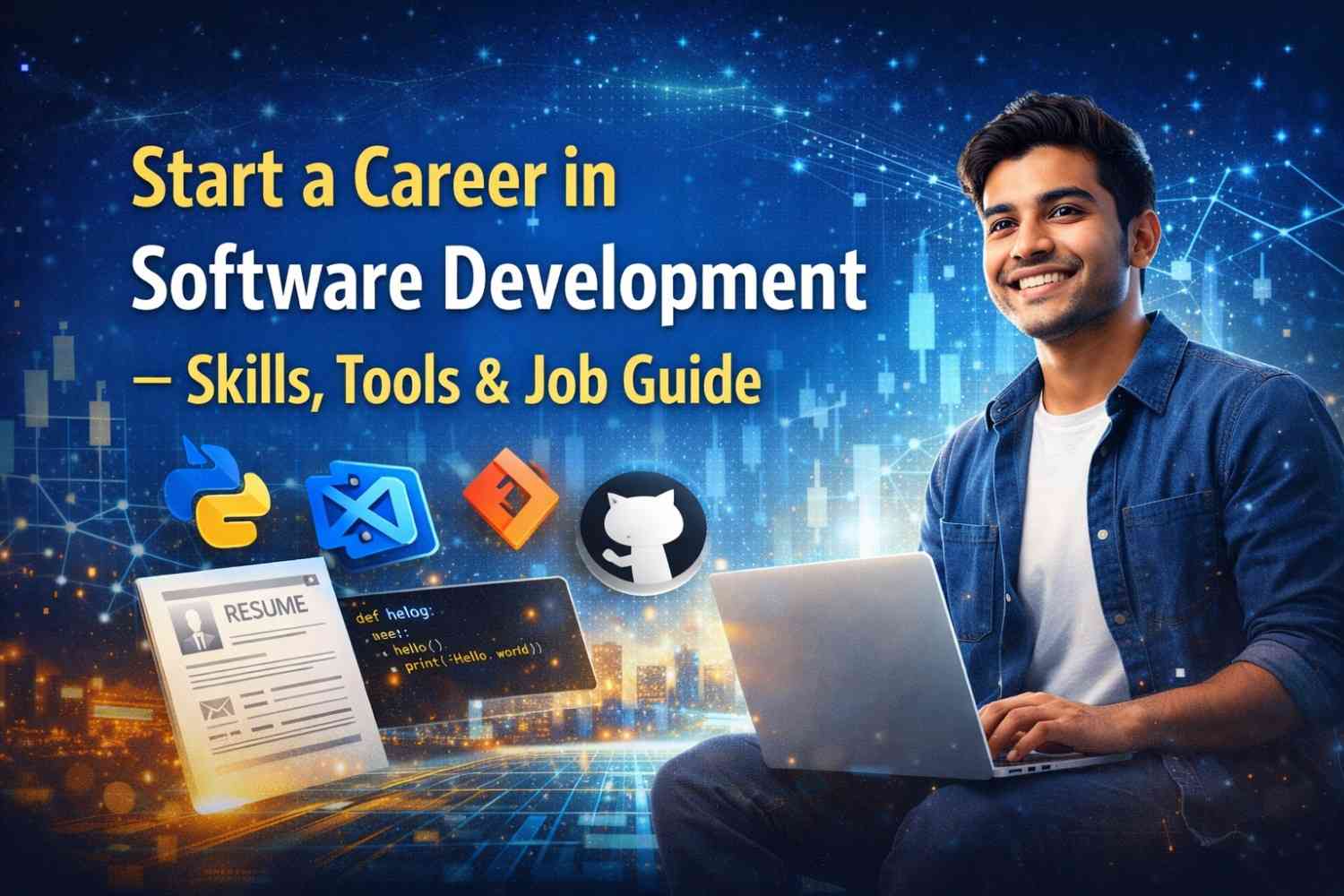
Software development continues to be one of the most in-demand and future-proof careers in 2026. With businesses rapidly moving toward digital transformation, skilled developers are needed across industries — from startups to global enterprises.
If you’re a student, graduate, or career switcher wondering how to begin, this guide will help you understand the step-by-step process to start a career in software development.
Why Choose Software Development as a Career?
Software development offers strong career growth, flexibility, and global job opportunities. Companies today rely on software for websites, mobile apps, automation, cloud systems, and AI-powered solutions.
Key benefits include:
-
High demand across industries
-
Competitive salary packages
-
Remote work opportunities
-
Continuous learning and innovation
-
Freelancing and entrepreneurship options
In 2026, software development is not just a job — it’s a long-term career path.
Step 1: Understand the Basics of Programming
Before choosing a specialization, start with programming fundamentals.
Important concepts to learn:
-
Variables and data types
-
Loops and conditions
-
Functions
-
Object-oriented programming
-
Problem-solving logic
Beginner-friendly programming languages:
-
Python
-
JavaScript
-
Java
-
C++
Python and JavaScript remain the most recommended languages for beginners in 2026.
Step 2: Choose a Career Path in Development
Software development includes multiple career paths. Choosing one helps you focus your learning.
Popular options include:
Web Development
Build websites and web applications using:
-
HTML
-
CSS
-
JavaScript
-
React
-
Node.js
Mobile App Development
Create Android and iOS apps using:
-
Flutter
-
React Native
-
Kotlin
-
Swift
Full-Stack Development
Work on both frontend and backend systems.
Data & AI Development
Learn:
-
Python
-
Machine Learning basics
-
Data analysis tools
For beginners, web development or full-stack development is often the easiest starting point.
Step 3: Learn Through Practical Projects
Employers value skills and projects more than theory.
Start building:
-
Personal portfolio website
-
To-do list app
-
Blog website
-
Calculator app
-
Simple eCommerce UI
Projects help you:
-
Apply concepts
-
Build confidence
-
Showcase your skills
-
Prepare for interviews
By 2026, a strong GitHub portfolio is almost essential for developers.
Step 4: Join a Structured Training or Internship Program
Self-learning is powerful, but guided training accelerates career growth.
A good software development training program should include:
-
Real-world projects
-
Mentor guidance
-
Industry tools and workflows
-
Internship opportunities
-
Portfolio development
Practical training helps bridge the gap between learning and employment.
Step 5: Learn Essential Developer Tools
Modern software developers must know industry tools.
Important tools include:
-
Git and GitHub
-
VS Code
-
Browser developer tools
-
APIs and Postman
-
Basic database knowledge (MySQL or MongoDB)
Understanding these tools makes you job-ready faster.
Step 6: Build a Developer Portfolio
Your portfolio is your digital resume.
Include:
-
About section
-
Skills list
-
Projects
-
GitHub profile link
-
Contact information
A strong portfolio shows employers what you can build — not just what you know.
Step 7: Prepare for Developer Interviews
Technical interviews typically test:
-
Programming basics
-
Logical thinking
-
Problem solving
-
Project understanding
-
Communication skills
Practice:
-
Coding questions
-
Explaining your projects
-
Basic computer science concepts
Confidence and clarity matter as much as technical knowledge.
Step 8: Apply for Internships and Entry-Level Roles
Start with:
-
Internships
-
Junior developer roles
-
Freelance projects
-
Startup opportunities
Your first job is about experience, not perfection.
Most successful developers in 2026 began their careers through internships and small projects.
Final Thoughts
Starting a career in software development in 2026 is more accessible than ever. With the right learning path, practical training, and consistent practice, anyone can become a skilled developer.