


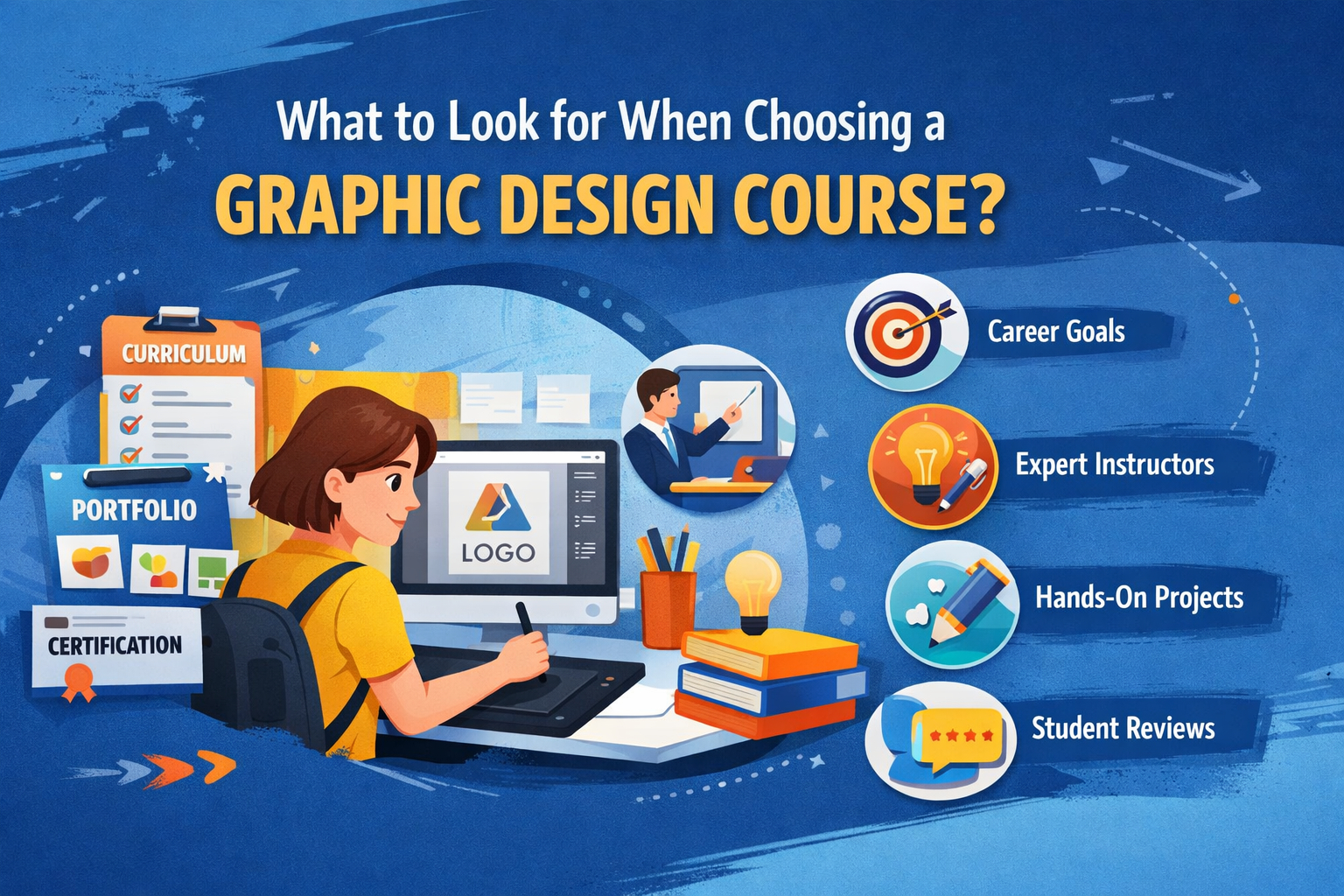
In today’s digital-first world, graphic design has become one of the most in-demand creative skills across industries. From startups and tech companies to marketing agencies and global brands, businesses rely on visual communication to attract, engage, and convert audiences. As a result, graphic design is no longer just an artistic hobby—it is a powerful career path with immense growth potential. However, with hundreds of online and offline courses available, choosing the right graphic design course can feel overwhelming. Some courses focus only on tools, others emphasize theory, while a few promise job placement without delivering real-world skills. Selecting the wrong course can cost you time, money, and confidence.
This comprehensive guide will help you understand how to choose the right graphic design course for your career goals, skill level, and budget—so you can make an informed decision and build a successful future in design.
Understanding Graphic Design as a Career
Before choosing a course, it is essential to understand what graphic design actually involves as a profession.
Graphic design is the art and practice of creating visual content to communicate messages. Designers use typography, colors, images, layouts, and symbols to convey ideas clearly and creatively. Graphic design is used everywhere—from logos and websites to mobile apps, advertisements, packaging, social media posts, and presentations.
Popular Career Options in Graphic Design
A well-structured graphic design course can open doors to multiple career paths, such as:
- Graphic Designer
- Brand Identity Designer
- UI/UX Designer
- Motion Graphic Designer
- Social Media Designer
- Visual Content Creator
- Marketing Designer
- Freelance Designer
- Creative Director (with experience)
Understanding which career direction you want to pursue will help you select a course that aligns with your long-term goals.
Identify Your Career Goals Before Choosing a Course
The most common mistake students make is enrolling in a graphic design course without defining their career objective. Graphic design is a broad field, and no single course can cover everything in depth.
Ask Yourself These Questions
- Do you want to work in a design agency or corporate company?
- Are you interested in freelancing or remote work?
- Do you want to specialize in branding, UI/UX, motion graphics, or social media design?
- Are you learning graphic design for a career switch or skill enhancement?
Why This Matters
For example:
- If you want to become a branding designer, your course should focus on logo design, brand identity systems, and typography.
- If you aim to work in digital products, then UI/UX and web design should be included.
- If freelancing is your goal, the course should teach client handling, portfolios, and pricing strategies.
Clear goals ensure you don’t waste time learning irrelevant topics.
Check the Course Curriculum in Detail
The curriculum is the backbone of any graphic design course. A good course balances theory, tools, and practical application.
Essential Topics Every Good Graphic Design Course Should Cover
Design Fundamentals
- Principles of design (balance, contrast, hierarchy, alignment)
- Color theory and psychology
- Typography basics
- Visual composition
Design Software
- Adobe Photoshop
- Adobe Illustrator
- Adobe InDesign
- Figma or Adobe XD (for UI/UX basics)
Branding & Visual Identity
- Logo design process
- Brand guidelines
- Visual storytelling
Print & Digital Design
- Posters, brochures, banners
- Social media creatives
- Website and app visuals
Portfolio Development
- Real-world projects
- Case studies
- Presentation skills
Industry Practices
- Design brief understanding
- Client feedback handling
- File formats and export standards
Red Flag to Watch For
Avoid courses that only teach tools without explaining why designs work. Software skills alone will not make you a successful designer.
Choose Between Online and Offline Graphic Design Courses
Both online and offline graphic design courses have advantages. The right choice depends on your learning style and schedule.
Online Graphic Design Courses
Pros:
- Flexible learning
- Affordable
- Learn from global instructors
- Self-paced options
Cons:
- Limited personal mentorship
- Requires self-discipline
- Less networking opportunities
Offline (Classroom-Based) Courses
Pros:
- Face-to-face mentorship
- Peer learning
- Better discipline
- Hands-on guidance
Cons:
- Fixed schedule
- Higher cost
- Location dependency
Hybrid Learning (Best of Both)
Many institutes now offer hybrid models—live online classes with recorded sessions and mentorship. This option is ideal for working professionals and students.
Evaluate the Instructor’s Experience and Expertise
The quality of instruction can make or break your learning experience.
What to Look for in an instructor
- Industry experience (not just teaching experience)
- Strong design portfolio
- Experience working with real clients or companies
- Ability to explain concepts clearly
- Active involvement in the design industry
Why Instructor Experience Matters
Design trends, tools, and client expectations change rapidly. An instructor with real-world experience can teach current industry standards, not outdated techniques.
Check Practical Training and Real-World Projects
Graphic design is a skill-based profession. Theory alone is not enough.
Importance of Hands-On Learning
A good graphic design course should include:
- Live projects
- Client-based assignments
- Design challenges
- Mock briefs
- Portfolio-ready work
Why Practical Experience Is Critical
Employers and clients don’t hire designers based on certificates—they hire based on portfolios. Practical projects help you:
- Apply concepts
- Build confidence
- Understand real design problems
- Create professional case studies
Look for Portfolio and Career Support
One of the biggest benefits of enrolling in a professional graphic design course is career guidance.
Key Career Support Features to Look For
- Portfolio development assistance
- Resume and LinkedIn optimization
- Interview preparation
- Freelancing guidance
- Internship or placement support
Portfolio Matters More Than Certificates
Your portfolio is your strongest asset. Choose a course that helps you build a strong, diverse, and professional portfolio aligned with your career goals.
Understand Course Duration and Learning Pace
Graphic design is not something you master overnight.
Typical Course Durations
- Short-term courses: 1–3 months (Basics only)
- Professional courses: 4–6 months
- Advanced or diploma courses: 6–12 months
Choose the Right Duration
- Beginners should opt for longer, structured courses
- Working professionals may prefer flexible or modular courses
- Avoid “learn graphic design in 30 days” promises
Quality learning takes time and practice.
Compare Course Fees and Value for Money
Price should never be the sole deciding factor, but it is important.
Don’t Choose the Cheapest Course Blindly
Instead, evaluate:
- What skills are you learning?
- How many tools are covered?
- Is mentorship included?
- Are projects and portfolio development part of the course?
A slightly higher investment in a quality course can lead to better career outcomes and higher earning potential.
Read Reviews and Student Testimonials
Always check what previous students say about the course.
Where to Look for Honest Reviews
- Google reviews
- LinkedIn testimonials
- Social media comments
- Alumni portfolios
What to Pay Attention To
- Student success stories
- Portfolio quality of past learners
- Instructor involvement
- Job or freelance outcomes
Avoid courses with fake promises or no student work showcased.
Check Industry Recognition and Certification
While certificates alone don’t guarantee jobs, they do add credibility.
Why Certification Matters
- Adds value to your resume
- Builds trust with clients
- Shows structured learning
- Helpful for internships and entry-level jobs
Choose courses offered by reputed institutes or platforms recognized in the industry.
Stay Updated with Industry Trends
Graphic design evolves continuously.
Modern Graphic Design Skills in Demand
- UI/UX design
- Motion graphics
- Social media creatives
- Branding for digital platforms
- Design systems
- AI-assisted design tools
Ensure the course curriculum is updated and future-ready.
Avoid Common Mistakes When Choosing a Graphic Design Course
- Choosing based on price alone
- Ignoring portfolio development
- Not checking instructor background
- Falling for unrealistic job guarantees
- Selecting a course without clear goals
Being informed helps you avoid disappointment later.
Final Thoughts: Making the Right Choice
Choosing the right graphic design course is a career-defining decision. The ideal course should not only teach you tools but also develop your creative thinking, problem-solving skills, and professional confidence.
Before enrolling, take time to:
- Define your career goals
- Review the curriculum carefully
- Check instructor credibility
- Ensure hands-on practice
- Look for career and portfolio support
Graphic design is a rewarding, flexible, and future-proof career if learned correctly. With the right course, dedication, and consistent practice, you can turn your creativity into a successful profession.
Frequently Asked Questions (FAQs)
What is the best graphic design course for beginners?
The best graphic design course for beginners is one that starts with design fundamentals, such as color theory, typography, layout principles, and visual hierarchy, before moving on to software tools.
Do I need a degree to become a graphic designer?
No, a formal degree is not mandatory to become a graphic designer. Most employers and clients focus on your portfolio and practical skills rather than academic qualifications.
Which software should a good graphic design course include?
A good graphic design course should cover industry-standard tools such as:
- Adobe Photoshop
- Adobe Illustrator
- Adobe InDesign
- Figma or Adobe XD
Learning these tools ensures you are job-ready and capable of handling real-world design projects.
How long does it take to learn graphic design?
The time required to learn graphic design depends on the course and your learning pace.
- Basic skills can be learned in 2–3 months
- Professional-level skills usually take 4–6 months
- Advanced expertise may take 6–12 months with continuous practice
Consistent practice plays a key role in mastering graphic design.
Is graphic design a good career choice in 2026 and beyond?
Yes, graphic design continues to be a strong career choice due to the growing demand for digital content, branding, and user experience design.
What should I look for in a graphic design course curriculum?
You should look for a curriculum that includes:
- Design principles and theory
- Practical projects and assignments
- Branding and visual identity
- Print and digital design
- Portfolio creation
- Industry best practices
A balanced curriculum helps build both creative and technical skills.
Can I learn graphic design online effectively?
Yes, you can learn graphic design effectively online if the course offers structured lessons, practical projects, mentor feedback, and portfolio support.
How important is a portfolio in graphic design?
A portfolio is extremely important in graphic design. It showcases your skills, creativity, and problem-solving ability. Employers and clients often prioritize a strong portfolio over certificates or degrees when hiring designers.
Does a graphic design course help with job placement?
Many professional graphic design courses offer career support such as resume building, interview preparation, internships, and placement assistance.
What is the average salary after completing a graphic design course?
Salaries vary based on skills, location, and experience. Entry-level graphic designers can expect modest salaries, while experienced designers, freelancers, and specialists in UI/UX or branding can earn significantly higher.
Can I become a freelance graphic designer after completing a course?
Yes, many graphic designers choose freelancing as a career option. A good course should teach you how to handle clients, price your work, create proposals, and build an online presence to succeed as a freelancer.
What are common mistakes to avoid when choosing a graphic design course?
Common mistakes include choosing a course based only on price, ignoring instructor experience, skipping portfolio development, and believing unrealistic job guarantees.