


The demand for full-stack developers continues to rise, and among the most sought-after skillsets is the MEAN Stack—a powerful JavaScript-based technology stack used to build modern, scalable web applications. Whether you’re a beginner in web development or a tech professional looking to upgrade your skills, mastering the MEAN Stack can open the doors to high-growth career opportunities.
This blog covers the essential skills every MEAN Stack developer must have to succeed in today’s fast-evolving tech industry.
What Is the MEAN Stack?
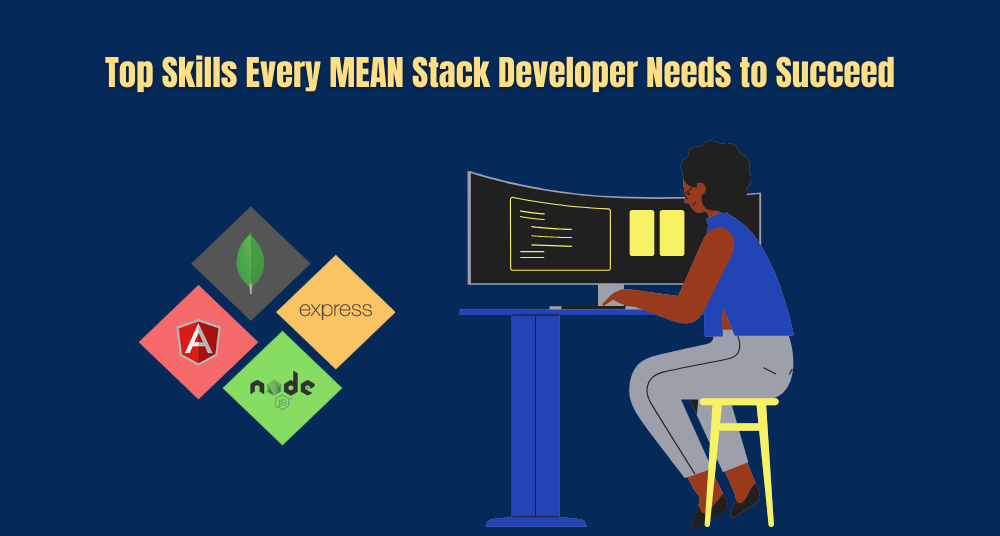
Before diving into the skills, let’s break down the MEAN stack:
-
M – MongoDB: NoSQL database for scalable data storage
-
E – Express.js: Lightweight backend framework for Node.js
-
A – Angular: Frontend framework by Google for building dynamic UI
-
N – Node.js: JavaScript runtime for server-side development
Together, they enable developers to build full-stack applications using one language—JavaScript, eliminating the need to learn multiple backend or frontend languages.
Core Skills You Need to Become a Successful MEAN Stack Developer
1. Strong Understanding of JavaScript (ES6+)
Since MEAN is entirely JavaScript-driven, mastering the language is non-negotiable.
Key JavaScript Concepts Developers Should Know:
-
Variables, loops, conditionals
-
Arrow functions
-
Async/await
-
Promises & callbacks
-
Modules & classes
-
Array and object manipulation
-
Event-driven programming
A strong command over JavaScript forms the base for the entire MEAN stack.
2. Expertise in Angular Framework
Angular is a robust frontend framework used to build interactive and scalable user interfaces.
Essential Angular Skills:
-
Components, modules, and services
-
Angular CLI
-
Data binding & event handling
-
RxJS & Observables
-
Reactive forms & template-driven forms
-
Routing & navigation
-
Dependency Injection
-
State management
-
Working with REST APIs
Understanding Angular’s architecture and TypeScript (its primary language) is crucial for building enterprise-level applications.
3. Backend Development with Node.js
Node.js allows you to run JavaScript on the server and build scalable backend applications.
Must-Have Node.js Skills:
-
Event loop & async programming
-
Working with modules
-
File handling
-
Authentication & Authorization (JWT, OAuth)
-
Real-time apps with WebSockets
-
Error handling & debugging
-
Using Node package manager (NPM/Yarn)
Node.js knowledge helps developers build powerful, high-performance servers.
4. Building APIs with Express.js
Express.js is a fast, minimalist backend framework.
Essential Express.js Skills:
-
Creating RESTful APIs
-
Middleware architecture
-
Routing systems
-
Template engines
-
Error handling
-
Integrating databases
-
API security best practices
Express integrates seamlessly with MongoDB and Angular, making it essential for full-stack development.
5. Database Management With MongoDB
MongoDB is a NoSQL database that stores data in flexible JSON-like documents.
Important MongoDB Skills:
-
Data modeling
-
CRUD operations
-
Aggregation pipelines
-
Schema design using Mongoose
-
Indexing & performance optimization
-
Working with NoSQL queries
-
Backup, replication & sharding basics
A MEAN stack developer must know how to build efficient, scalable database structures.
6. Version Control (Git & GitHub)
No developer can survive without version control today.
Version Control Skills:
-
Basic Git commands
-
Branching & merging
-
Pull requests
-
Conflict resolution
-
Maintaining collaborative repositories
Git ensures clean, trackable, and error-free development.
7. RESTful API Integration
APIs connect your frontend (Angular) with your backend (Node+Express).
A good MEAN developer must know how to:
-
Consume APIs using Angular services
-
Handle HTTP methods (GET, POST, PUT, DELETE)
-
Work with JSON data
-
Manage authentication tokens
-
Handle errors & responses
8. Deployment & DevOps Basics
Knowing how to deploy MEAN applications is a major advantage.
Deployment Skills Include:
-
Hosting on AWS, Azure, DigitalOcean, or Render
-
CI/CD pipelines
-
PM2 for Node process management
-
Docker basics
-
Environment configuration
-
Using MongoDB Atlas
Being deployment-ready makes a developer more industry-ready.
9. Problem-Solving & Debugging Skills
Debugging is a crucial part of development.
A MEAN developer should know:
-
Chrome DevTools
-
Postman for API testing
-
Node debugger
-
Angular debugging tools
-
Logging best practices
These skills improve efficiency and reduce development time.
10. Soft Skills Every Developer Must Have
Technical skills are important—but soft skills matter too.
-
Analytical thinking
-
Communication skills
-
Team collaboration
-
Time management
-
Writing clean, maintainable code
These qualities make developers more effective and job-ready.
Why Learn MEAN Stack in 2025?
Here are some reasons why MEAN remains a top choice for developers:
-
High demand in startups & enterprises
-
Faster development time
-
End-to-end JavaScript (one language for everything)
-
Scalable and flexible architecture
-
High-paying job opportunities
Companies often prefer MEAN stack developers because they can handle the entire development process independently.
Conclusion
Becoming a MEAN Stack developer requires a solid understanding of both frontend and backend technologies—from Angular and Node.js to MongoDB and Express.js. With the right skillset and hands-on practice, you can build modern, scalable web applications and unlock excellent career opportunities in full-stack development.